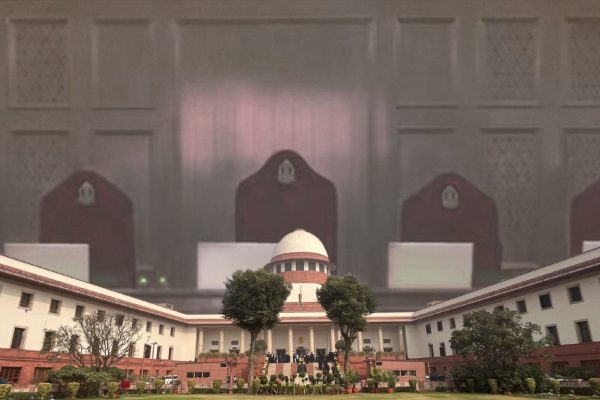
The Supreme Court of India has summarised the governing principles of the doctrine of constructive res judicata, reiterating that parties are required to raise all grounds that “might and ought” to have been raised in earlier proceedings and cannot avoid the doctrine by attributing omissions to negligence, inadvertence or accident.
The judgment was delivered by a bench in the case of Constructive Res Judicata, with the Court making important observations about the limits and application of this legal doctrine. [2026 LiveLaw (SC) 628]
What Is Constructive Res Judicata?
Constructive res judicata is a principle under the Code of Civil Procedure, 1908 — specifically under Explanation IV to Section 11 — which states that if any matter that might and ought to have been raised in earlier litigation was not raised, it shall be deemed to have been decided against the party. Unlike ordinary res judicata which bars re-litigation of issues actually decided, constructive res judicata bars grounds that could have been raised but were omitted.
Supreme Court’s Key Observations
The Court explained that constructive res judicata is intended to prevent multiplicity of proceedings by mandating that all grounds available to a litigant should be urged at the appropriate stage. The doctrine serves the twin purposes of finality of litigation and protection of the opposite party from harassment through successive suits on the same cause of action.
The Court noted that while the principle is a deeming fiction in law, its application is not uniform and depends upon the facts and circumstances of each case. The Court clarified that its applicability must be determined with due regard to the ambit of the earlier proceedings and the nexus between the omitted issue and the controversy already decided.
Limits of the Doctrine
The Supreme Court was careful to note that constructive res judicata does not apply in all situations. The Court observed that parties cannot be penalised for not raising grounds that were unknown to them or which arose after the earlier litigation. The doctrine applies only to grounds that were available and ought to have been raised, not to entirely new facts or rights that arose later.
Impact on Litigants
This clarification is significant for litigants, as it underscores the importance of taking comprehensive legal advice before instituting proceedings. Parties must ensure that all available grounds are pleaded in the first instance, failing which they risk being barred from raising them in subsequent proceedings, even if the earlier omission was due to oversight.
Source: Supreme Court of India | Decided: June 15, 2026 | Reported by: LiveLaw News Network