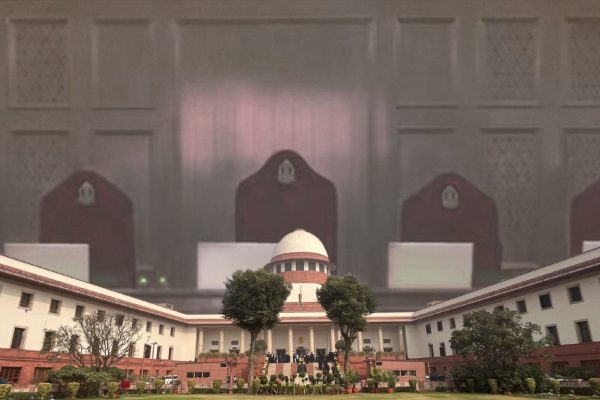
The Supreme Court of India has reiterated the settled legal principle that dismissal from service is the severest punishment that can be imposed on a government employee, and must therefore be reserved only for cases involving grave or serious misconduct. The Court emphasised that the punishment should be proportionate to the gravity of the proved charges.
The Principle of Proportionality in Disciplinary Proceedings
The Supreme Court has consistently held that in service law matters, the punishment imposed for misconduct must be proportionate to the gravity of the offence. Dismissal — which results in the permanent removal of an employee from service with loss of all service benefits — represents the most extreme end of the disciplinary spectrum and should not be imposed for minor or technical violations.
The Court’s ruling reaffirmed that even where misconduct is proved, the authority imposing punishment must carefully consider the gravity of the misconduct, the employee’s service record, any extenuating circumstances, and whether lesser punishment would serve the purpose of discipline.
Judicial Review of Disproportionate Punishment
While courts are generally reluctant to interfere with disciplinary penalties imposed by competent authorities, the Supreme Court has carved out an exception where the punishment is found to be shockingly disproportionate to the proved misconduct. In such cases, courts may modify the punishment to one more commensurate with the gravity of the offence.
The landmark judgment in B.C. Chaturvedi v. Union of India (1995) established that courts can interfere in disciplinary penalties on the ground of “shockingly disproportionate punishment.” This principle has been consistently applied in subsequent cases.
Impact on Service Law
This ruling has significant implications for disciplinary proceedings in government services across India. It serves as an important reminder to disciplinary authorities that the imposition of dismissal must be the result of careful deliberation, taking into account all relevant factors, rather than an automatic or reflexive response to any finding of misconduct.
Employees facing disciplinary proceedings may invoke this principle before tribunals and courts to challenge disproportionate punishments, including dismissal for relatively minor infractions.
Source: Supreme Court of India | Citation: 2026 LiveLaw (SC) 624 | June 2026