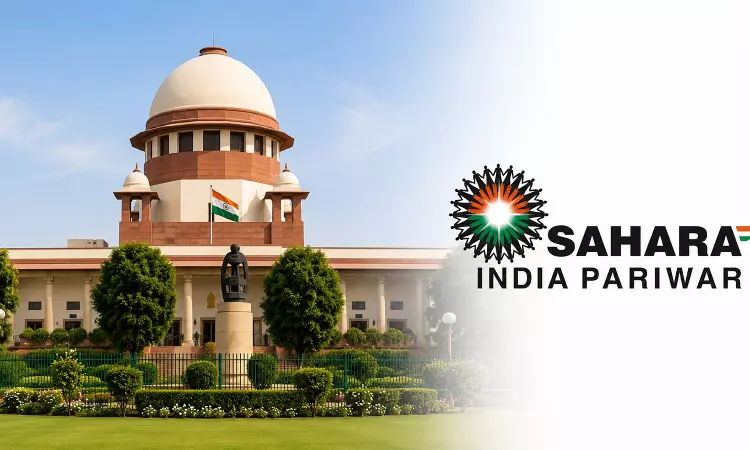
The Securities and Exchange Board of India (SEBI) has moved the Supreme Court challenging the relief granted by the Securities Appellate Tribunal (SAT) to managers of Sahara companies in the long-running ₹14,106 crore refund matter. SEBI’s appeal before the Supreme Court seeks to set aside the SAT’s order that provided relief to the concerned individuals.
The Sahara-SEBI Saga
The Sahara-SEBI dispute is one of the most complex and long-running securities law matters in India. In August 2012, the Supreme Court delivered its landmark judgment in Sahara India Real Estate Corporation Ltd. & Ors. v. SEBI & Anr., directing the Sahara group — led by Subrata Roy — to refund approximately ₹24,000 crore to investors who had subscribed to Optionally Fully Convertible Debentures (OFCDs) issued by two Sahara companies without complying with SEBI’s disclosure requirements.
Subrata Roy was arrested in 2014 for failing to comply with the Supreme Court’s directions and was later released on parole. The dispute over the refund of investor money has continued through multiple rounds of litigation before the Supreme Court, SAT, and other forums.
Current Dispute
SEBI’s appeal before the Supreme Court relates to relief granted by SAT to certain managers of the Sahara companies. The regulator contends that SAT’s order is contrary to the Supreme Court’s earlier directions and the regulatory framework governing securities law violations.
SAT’s Role
SAT is an appellate tribunal established under the SEBI Act, 1992, which hears appeals from orders of SEBI. Its decisions are subject to appeal to the Supreme Court on questions of law.
Regulatory Significance
The Sahara case has had profound implications for securities regulation in India. It led to significant reforms in the regulatory oversight of companies raising funds from the public, and established important precedents on SEBI’s jurisdiction and enforcement powers. The continued litigation reflects the complexity of enforcing large-scale regulatory orders.
Court: Supreme Court of India | Source: LiveLaw | June 2026