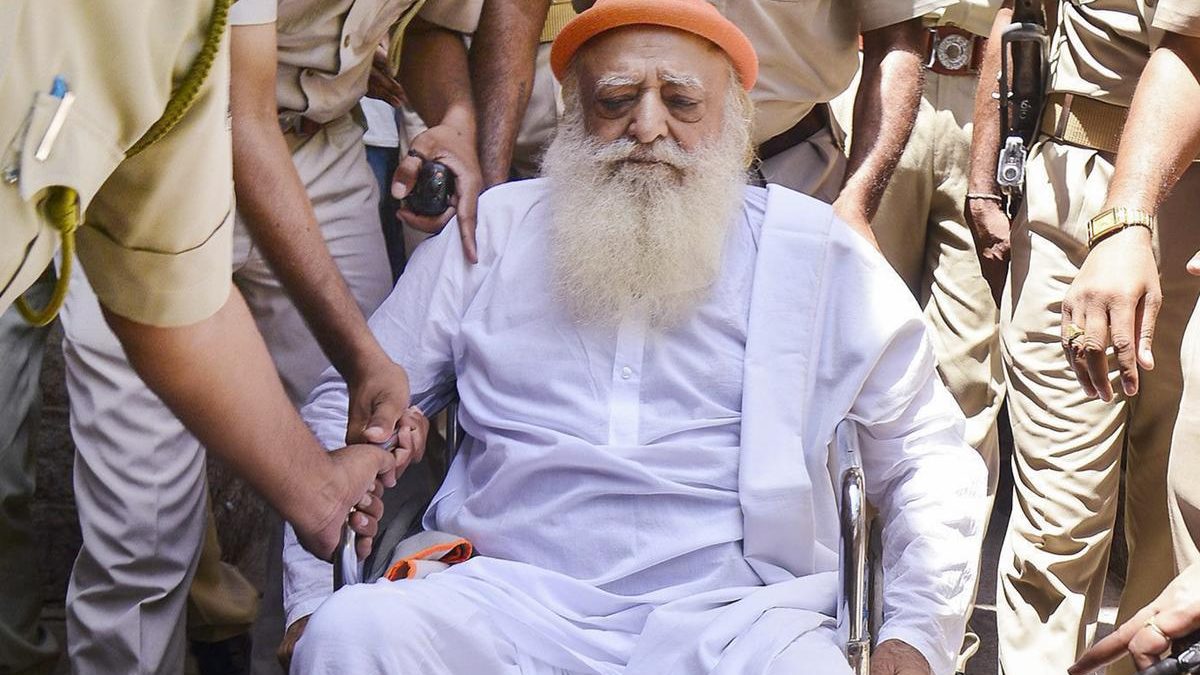
Self-styled godman Asaram Bapu, convicted and sentenced to life imprisonment by a Gandhinagar court in a 2013 rape case, withdrew his application seeking extension of temporary bail from the Gujarat High Court on June 12, 2026. The withdrawal came following the Rajasthan High Court’s recent judgment upholding his conviction and life sentence in the Jodhpur rape case.
Asaram’s counsel submitted before a Division Bench of Justice Gita Gopi and Justice L.S. Pirzada that the bail extension application was being withdrawn in light of the recent Rajasthan High Court ruling.
Background: Asaram’s Multiple Convictions
Asaram was convicted by the Gandhinagar Sessions Court for the rape of a minor girl at his ashram in Motera, Ahmedabad, in 2013. He was also convicted in a separate rape case by a Jodhpur court involving two girls from his Surat ashram. The Rajasthan High Court recently upheld the Jodhpur conviction and life sentence, significantly strengthening the case against any bail application.
Temporary Bail History
Asaram had been granted temporary bail on previous occasions on medical grounds, given his advanced age and health conditions. He had sought extension of the temporary bail from the Gujarat High Court, but in view of the Rajasthan High Court’s order upholding his conviction, chose to withdraw the application.
Legal Significance
The case against Asaram represents one of the most significant criminal convictions of a religious figure in modern Indian legal history. The consistent judicial position that has upheld convictions and denied bail reinforces the principle of equality before the law — that persons holding religious or social authority are not above criminal accountability.
The case also highlighted serious issues about the abuse of positions of power and trust by religious leaders, and led to broader public debate about the accountability of institutions and individuals in positions of spiritual authority.
Court: Gujarat High Court | Bench: Justice Gita Gopi and Justice L.S. Pirzada | Date: June 12, 2026 | Source: LiveLaw