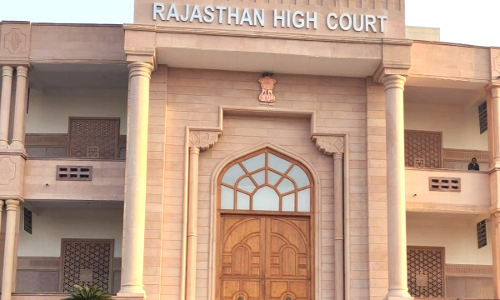
The Rajasthan High Court has set aside an order of the Board of Revenue directing the impleadment of a party in a matter without there being any prayer for such impleadment, calling it a “gross abuse of law.” The Court expressed strong displeasure at the ex-parte nature of the order.
Facts of the Case
The matter arose when the Board of Revenue, Rajasthan — a quasi-judicial body that exercises appellate and supervisory jurisdiction in revenue matters — passed an order directing the impleadment (addition) of a party to a case without any application having been moved by any of the existing parties seeking such impleadment.
The party sought to be impleaded challenged the order before the Rajasthan High Court, contending that the Revenue Board had acted beyond its jurisdiction and contrary to principles of natural justice by impleading them without any prayer and without giving them an opportunity to be heard before the order was passed.
High Court’s Ruling
The Rajasthan High Court set aside the Revenue Board’s order, characterising it as a “gross abuse of law.” The Court held that an impleadment order passed without any prayer from the existing parties, and without giving the party to be impleaded a hearing, was contrary to the fundamental principles of natural justice — including the principle of audi alteram partem (hear the other side).
The Court further observed that the Revenue Board had exceeded its jurisdiction in directing impleadment in the absence of any application. Courts and quasi-judicial bodies can exercise the power of suo motu impleadment in certain circumstances, but this must be done with procedural fairness, including giving notice to the party to be impleaded.
Natural Justice and Impleadment
The principle of natural justice requires that before any adverse order is passed against a person — including an order bringing them before a court or tribunal as a party to a dispute — they must be given notice and an opportunity to be heard. An ex-parte impleadment order denies the party this fundamental right.
Significance
This judgment is a significant reminder to revenue courts and boards that procedural fairness must be maintained at all stages of revenue proceedings. The ruling reinforces the importance of following established procedures even in administrative and quasi-judicial proceedings.
Court: Rajasthan High Court | Source: LiveLaw | June 2026